Our rating
What we like
- VG-10 and AUS-10 cores at 60 ±2 HRC — harder than most knives at lower price tiers and holds an edge longer
- 67-layer and 110-layer Damascus construction verified on individual product pages
- Full-tang G10 and stabilized resin handles rated for moisture and kitchen heat
- Double-bevel grinds at 9–15° per side — genuinely Japanese geometry
- Limited lifetime guarantee on manufacturing defects plus 30-day returns
- Free shipping on all orders, no minimum required
Watch out for
- HRC ratings are product-page-level, not printed on packaging — verify the specific knife before buying
- Damascus layering is primarily cosmetic on the cladding; only the core steel determines edge performance
- G10 handles are durable but not the warmest feel — wood-handle fans may prefer other brands
- Despite the lifetime name, guarantee claims must be filed within 12 months of purchase; chips from bones or dishwashers are excluded
- Wide blade formats like the Kanpeki cleaver require a full-size cutting board to use safely
What Seido Knives Is
Seido Knives builds Japanese-style kitchen knives that combine Damascus aesthetics with functional high-carbon steel cores. The brand’s stated goal is to put professional-grade steel — VG-10 and AUS-10, both staples of Japanese cutlery — into the hands of home cooks at prices that don’t require a waiting list or a custom-smith premium. They’ve earned media coverage on CBS News, Fox News, NBC News, and USA Today, and they back every knife with a free lifetime guarantee on manufacturing defects plus a 30-day return window.
The range is wider than most knife brands at this tier. Seido sells chef’s knives, cleavers, petty knives, serrated bread knives, steak knives, paring sets, and plating tools — all designed to read as a coherent collection on the counter.
The Steel That Matters: VG-10 and AUS-10
Every buying decision about a Seido knife starts here. The brand uses two Japanese steels:
VG-10 is a high-carbon stainless alloy with added vanadium. It sits at approximately 60 ±2 HRC on the Rockwell scale — meaningfully harder than the 56–58 HRC typical of German steels like X50CrMoV15. Harder steel holds a finer edge longer between sharpenings. The trade-off is brittleness: VG-10 blades should not contact bones, frozen food, or hard rind without risk of micro-chipping.
AUS-10 (used in the Epokishi petty and as half of the Shinko’s 110-layer construction) is slightly tougher and more flexible than VG-10 at comparable hardness levels — a practical choice for utility knives that see varied prep tasks.
The Damascus cladding on both steels — 67 layers on the Kanpeki and Epokishi, 110 alternating layers on the Shinko — contributes the distinctive flowing pattern and adds corrosion resistance. Edge performance, however, comes from the core. Buyers choosing between Seido models should prioritize the core steel type over layer count.
The Core Lineup: Which Knife Does What
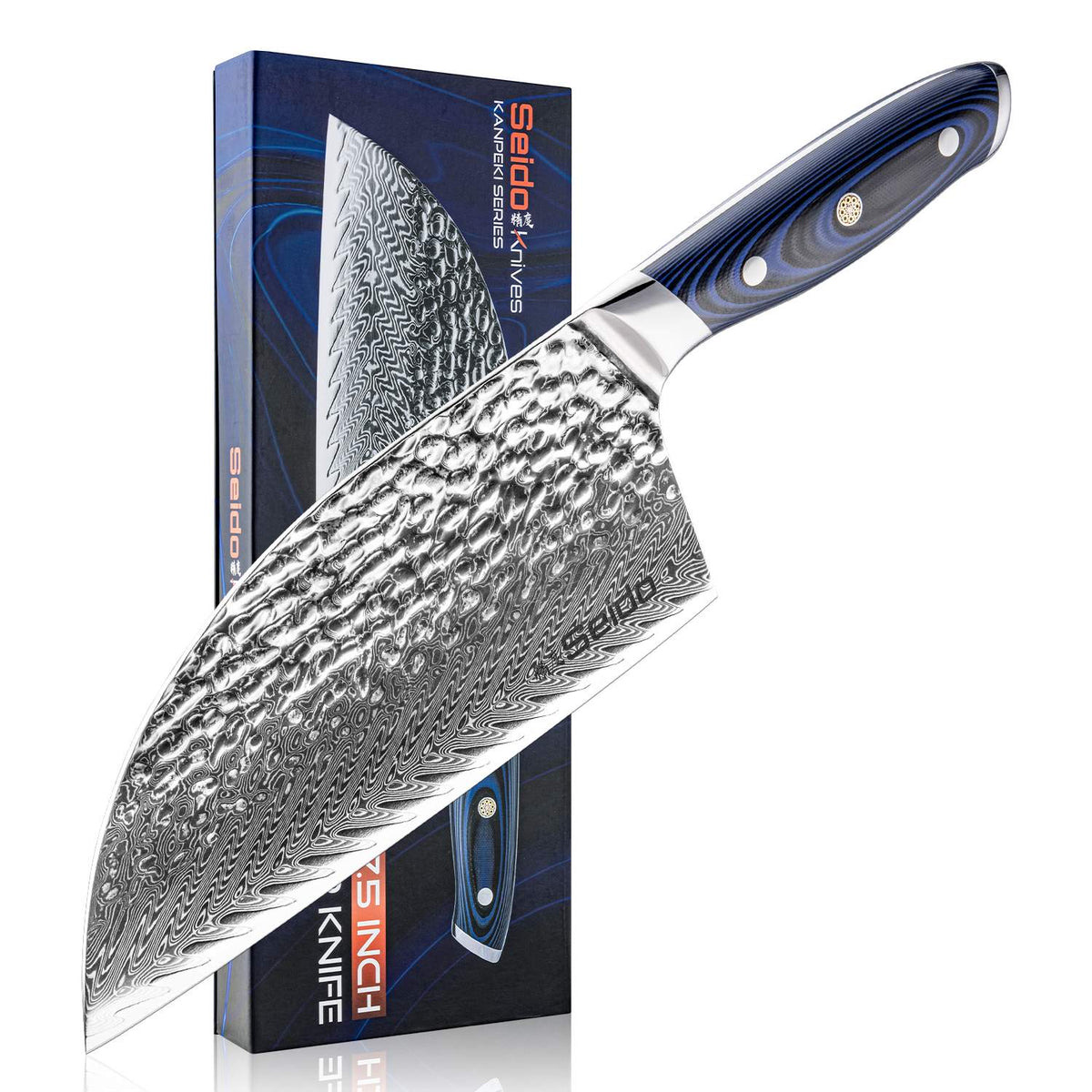
The Kanpeki 7.5” Cleaver is the showpiece. Its nearly 3.5-inch blade height makes it a true push-cut vegetable cleaver — the wide face scoops prep directly into the pan. The tsuchime hammered finish on the upper blade reduces stiction; the blue G10 handle is moisture-resistant and grips firmly at 12.9 oz.
The Shinko 8” Gyuto is the everyday chef’s knife. At 173g with a neutral balance point at the bolster, it suits both pinch-grip and handle-grip users. The 9–12° double bevel is on the finer end for Western-trained cooks accustomed to 15–20° German blades — expect noticeably more effortless slicing on soft produce.
The Epokishi 5” Petty fills the gap between a chef’s knife and a paring knife — the format for trimming proteins, breaking down small vegetables, and any task where a full-size blade is unwieldy. The faceted epoxy-resin handle keeps grip positive when wet.
For bread, tomatoes, and cakes, the Shujin 10” Serrated Knife uses a scalloped granton edge that cuts through crust without compression. The Shujin Paring Set rounds out a complete prep collection with three shapes — bird’s beak, straight, and serrated — for in-hand peeling and decorative work.
The Awabi Steak Knives with abalone shell resin handles are the table-service piece: serrated VG-10 that handles a sear-crusted steak cleanly, available in sets of four or six.
Shipping, Returns & Warranty
Seido ships free on all orders with no minimum. Returns are accepted within 30 days. The brand’s limited lifetime guarantee covers manufacturing defects in materials and workmanship (claims must be filed within 12 months of purchase); damage from misuse — impact on hard objects, dishwasher cycles, improper sharpening — is not covered. Multiple fulfillment locations across the US and Canada are listed, though specific transit times are not published on the policy pages reviewed for this article.
Is Seido Worth It vs. Alternatives?
The closest comparable brands at a similar position are Dalstrong and Shogun Series knives, which also use VG-10 in Damascus formats at accessible prices. Dalstrong’s Shogun series runs in a similar hardness range and offers more detailed spec sheets. Seido’s differentiation is its handle variety — the abalone shell resin and colored G10 options give the collection a visual identity that Dalstrong’s more uniform aesthetic does not.
For buyers who want a simpler, no-drama chef’s knife and don’t care about Damascus aesthetics, a Victorinox Fibrox or MAC Professional will cost less and be easier to maintain on a budget whetstone. Seido’s value proposition is steel quality plus visual character — if one or the other doesn’t matter to you, look elsewhere.
How We Researched This Review
This review is based on Seido’s brand website, individual product pages for the Kanpeki, Shinko, and Epokishi models, published steel specifications on those product pages, the brand’s guarantee and shipping and returns policies, verified customer reviews cited on the Seido site, and independent media coverage referenced on the brand’s homepage. We did not use or handle the knives. Steel hardness ratings are sourced directly from the product pages and are stated as brand-published figures.
Seido Knives Products Worth a Look
-
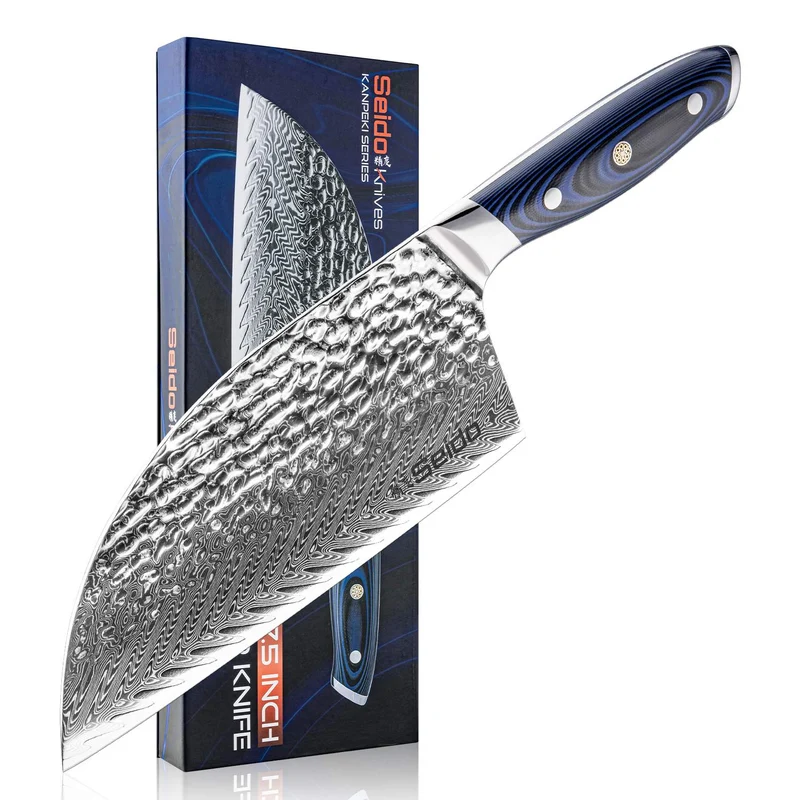
Kanpeki 7.5" Cleaver Knife
VG-10 core, 67-layer Damascus cladding with tsuchime hammered finish, 60 ±2 HRC. Blade about 7.5 inches long with a nearly 3.5-inch heel height; double-bevel 12–15° per side. Blue/black G10 handle with mosaic pin.
-
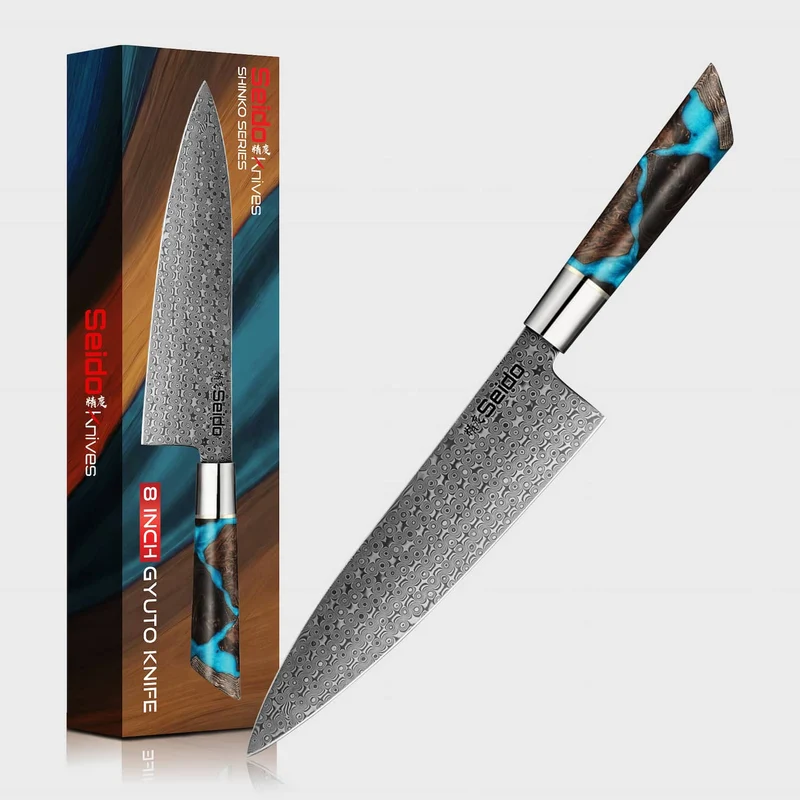
Shinko 8" Gyuto — 110-Layer Damascus
110 alternating AUS-10 and VG-10 layers (55 each), ~60 ±1 HRC, 9–12° edge. Blade 211mm; stabilized maple-resin handle at 173g — well-balanced for rocking cuts.
-
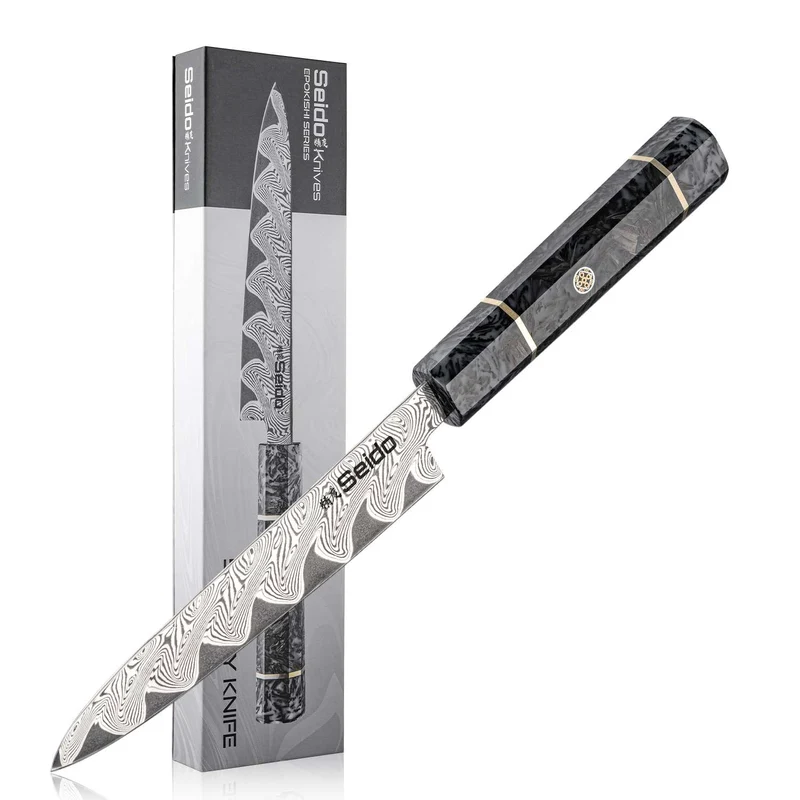
Epokishi 5" Petty Knife
67-layer AUS-10 Damascus steel in a compact utility format for trimming, peeling, and in-hand prep. Faceted grey epoxy resin and carbon handle keeps grip secure when wet.
-
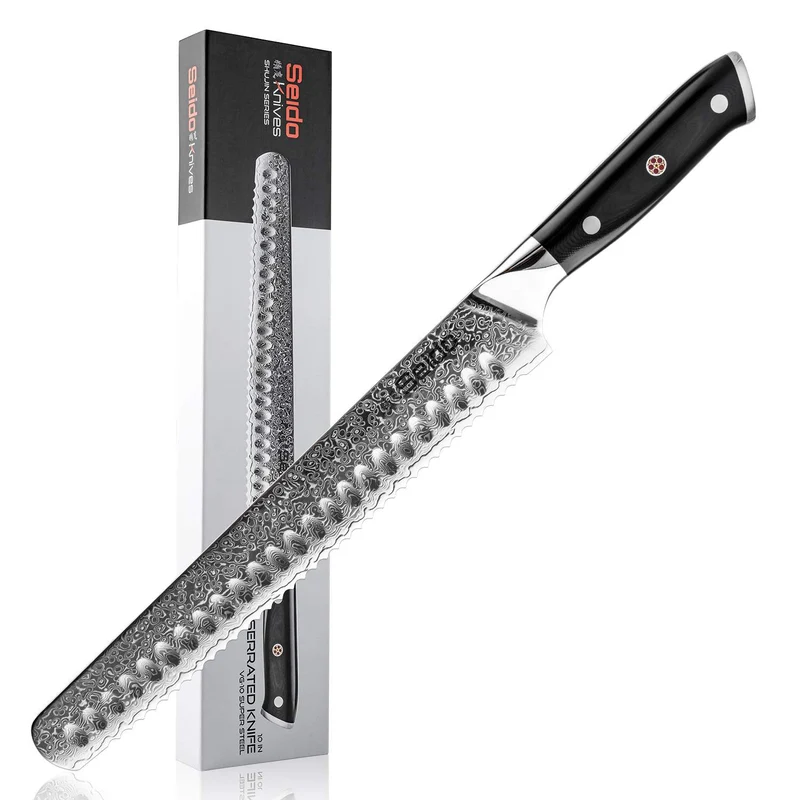
Shujin 10" Serrated Knife
VG-10 core with scalloped and granton reliefs for clean cuts through bread crusts, tomatoes, and cakes without crushing. G10 handle matches the wider Shujin family.
-
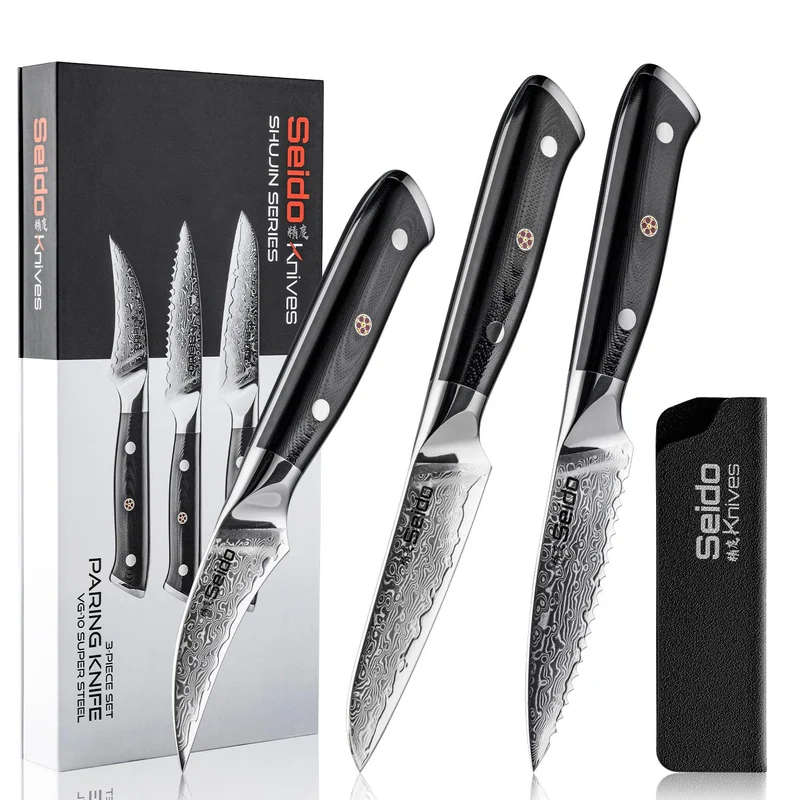
Shujin 3-Piece Paring Set
Bird's beak peeler, straight parer, and serrated parer — all VG-10 Damascus — for in-hand work where a chef's knife is oversized. G10 handle construction throughout.
-
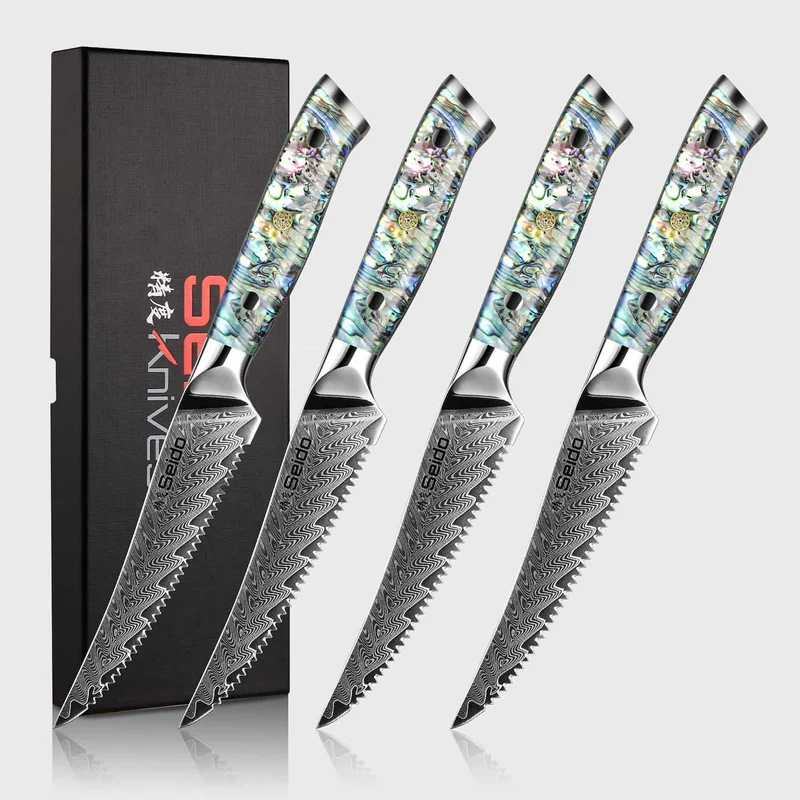
Awabi Serrated Steak Knives
VG-10 core, 67-layer Damascus, abalone shell resin handles. Available in sets of 4 or 6; serrated edge handles crust and sear without tearing tender centers.